Libresca (adj.): Bookish

No photos of me reading in South America, so here's one of me reading "The Poisonwood Bible" while waiting for our flight to Kenya from Tanzania.

No photos of me reading in South America, so here’s one of me reading “The Poisonwood Bible” while waiting for our flight to Kenya from Tanzania.

As a little girl, it often happened that my parents would suddenly realize I wasn’t behind them and look anxiously around, only to watch bemusedly as I crossed a busy street with my face partially covered with a book. I hid my own books (which varied from Goosebumps to Roald Dahl to books of poetry) in textbooks or open under my desk at school, so that formal education wouldn’t interfere with my own literary one. As a teenager, one of the biggest beefs I had with my stepmother was our inability to see eye to eye on whether or not it was acceptable to read throughout dinner, regardless of whether we were at home or at a restaurant. As a freshman moving into my first dorm, I brought with me more books than clothes. As an adult, my friends consider me a lending library without late fees. From the day I wrenched Go, Dogs, Go! out of my father’s hands to read it myself till now, books have been one of my main connections to the world outside my little insulated piece of it. A look inside my head would reveal that I carry with me the characters of books I’m reading, the words of authors I’ve loved, the stories that have had some kind of impact on me. The words of others have always had the power to anchor me to the present, entice me back into the murkiness of my own memories, or vault me into a barely imagined future.

There are many, many things I love about reading but one of the most interesting is how someone else’s story, whether real or imagined, can help you understand your own personal experiences in rich and unexpected ways. Before I ever set foot on a plane or in a foreign country, books were my passage to worlds I had never imagined, lives I could not have related to beforehand, ways of thinking that pushed up against mine like an opposing magnet. Now that I’ve actually been to different parts of the world, certain books have allowed me to delve deeper into whatever country or culture I found myself observing and, hopefully, participating in. The first time I truly felt this was when I read Ngugi wa’ Thiongo’s novel Petals of Blood* whilst on safari in Kenya, which is where the book is set. On the same trip, I also read Barbara Kingsolver’s The Poisonwood Bible, and I felt my heart break as it opened itself up to a new and painful understanding of the White Man’s parasitic influence and history in Africa. Since I’ve been in South America, I’ve made a point of trying to read books that I felt would add some depth to my travels and I can’t believe the poignancy and absolute fucking perfection of some of the books I’ve read paired with the moments, places, and frames of mind in which I’ve read them.

  f8d8187c58e0dd45937354e6167434d414f4141   0393318060.01._SX140_SY224_SCLZZZZZZZ_   c3b0249a9242b9759366c4154674141414d6741

I think it is a good idea to know a little history about the country you’ll be visiting, to be an informed tourist. It gives you context, a frame of reference. It helps you understand the whys and hows and WTFs that so often accompany traveling to new places. For this reason I decided to read Eduardo Galeano’s Memory of Fire trilogy, a history of the Americas that arcs from the creation myths of the ancient civilizations to the conquest (in Genesis) to independence (in Faces and Masks) to nationalization and the civil wars and military dictatorships of the 20th century (in Century of the Wind). It is written in a way that appeals to the fiction reader who does not usually pick history books off the shelf. Instead of the dry and lengthy texts one usually expects, Galeano tells this particular history in the form of short “stories” or anecdotes, usually no more than a page or two long. Each one concerns an event, idea, or person that makes up the patchwork of Latin American history.

His words and images came to me often: while visiting the Museo de Oro* in Bogotá, for example, or while picking my way through volcanic rocks to La Lobería on San Cristóbal, or most devastatingly in the Guayasamín* museum in Quito. It made each place I visited seem like more than just a static place in time, one place in one moment in which I (one person) was visiting. Suddenly it was like I was standing in one place, the present, while being given the gift of simultaneously looking behind me into the past. These were histories I had never heard of. Genocides and triumphs, violations and acts of heroism that were suppressed in the institutionalized practice of omission and hypocrisy that is grade school American History. Sometimes I would get so angry reading these accounts that I would have to close the book, feeling ashamed of the lengths to which my country has gone in order to secure its own success at the expense of others (mainly South and Central America). But that is exactly why I read. I want to know things that pain me so that I can better understand and empathize with the reality of the people I meet and the places I travel to. In this case, ignorance is not bliss, but blatant irresponsibility.
0307592731.01._SX140_SY224_SCLZZZZZZZ_

While reading this trilogy (which is wonderful and I recommend it, though it is not exactly a page-turner), I began to read other books that had been sitting on my reading lists for who knows how long. Possibly the most important of the whole trip was Cheryl Strayed’s Wild. This is Strayed’s account of her own solo three-month hike on the Pacific Coast Trail, which stretches across the coastal United States, from Northern Mexico to Canada. I picked it up because I had read some essays of Cheryl’s, but I was not in any way prepared for how much it would resonate with me. Despite the fact that the impetus for her journey was to find some escape and relief from the traumas of death, divorce, and addiction while mine was only to escape ennui and days spent in a job I despised, it was the fact that we were both women traveling alone, searching for something we could not define, that spoke to me.

Sometimes I would be reading and it would be as if her words had torn themselves away from their embryonic siamese twin in my head. At other times her words of strength and resilience and power would come back to me in moments of anxiety, like some enchanted mantra designed to keep me from submitting to weakness.

Fear, to a great extent, is born of a story we tell ourselves, and so I chose to tell myself a different story from the one women are told. I decided I was safe. I was strong. I was brave. Nothing could vanquish me.

These words, Strayed’s words, forced themselves through a fog of worry as I sat at the back of a twenty-five cent colectivo full of rough-looking men which was supposedly heading to the Peruvian/Ecuadorean border. While having a minor panic attack 80 feet below the waves off the coast of the Galápagos island of San Cristóbal*, these words wrapped around me like a warm current (or like peeing in your wetsuit): “I only felt that in spite of all the things I’d done wrong, in getting myself here, I’d done right”, and my panic faded. When she spoke of how laughably ill-prepared she was for her trek, I could think only of my own lack of preparation when I started out on my hike through the Colombian jungle north of Santa Marta, in search of the Ciudad Perdida, with all the right gear and none of the necessary experience. Perhaps most importantly of all, it was in this book that I first read the poem* excerpt that I later tattooed on my shoulder in Cuenca:

When I had no roof, I made audacity my roof.

I have learned what Cheryl learned: while traveling alone, you find that you yourself are capable of so much more than you had ever imagined.
0385486804.01._SX140_SY224_SCLZZZZZZZ_

Into the Wild was a book I had been meaning to read for a very long time. I had seen the movie so I knew the gist of it: man v. wild; wild wins. But it was the main character, Christopher McCandless’, desire for freedom and the unknown that called me to read it while on my own travels. Although I admire much of what McCandless accomplished, I took this book as more of a warning than anything else. His story, though it also includes moments of the kind of transcendence and self-fulfillment that so many travel books do, is ultimately a reflection of the darker side of travel. So much of traveling is absolute wonder, but there are infinite opportunities for things to go wrong, sometimes fatally so.

Climb if you will, but remember that courage and strength are nought without prudence, and that a momentary negligence may destroy the happiness of a lifetime. Do nothing in haste; look well to each step; and from the beginning think what may be the end.

This book reminded me that though I may feel free, I am not invulnerable to accident, to malice. I have a responsibility to do everything within my power to deny the “siren song of the void” and come back to the people who are waiting for me.

226201_792755649278_3559236_n

Another old picture. Bringin’ booknerd sexy back.

Reading allows you to live the lives of other people who have had similar experiences to yours, to learn from their mistakes and successes. For me, reading these and other books during this time has augmented my travels in a way I don’t believe anything else could have. There have been moments while reading, on a bus from here to there, on a bench on the malecón in San Cristóbal, while lying in a hammock with a Pilsener within reach, where I have laughed out loud to read something that so closely mirrored, explained, or otherwise encapsulated my own experiences. I don’t expect everyone to understand this post, to be able to relate. There are people to whom reading is akin to breathing or eating, there would be no life without it. It is to those people that I am writing this blog, although I hope everyone else will take something from it as well. But there is one thing that I think anyone can understand: reading the stories of others who have led or are leading similar lives to yours… it helps you feel less alone when the sheer size and force of the world seems just a little too overwhelming.

*Click these links to see the blog entries where they are discussed more in depth.
La Güera Seeks Escape, Finds Freedom

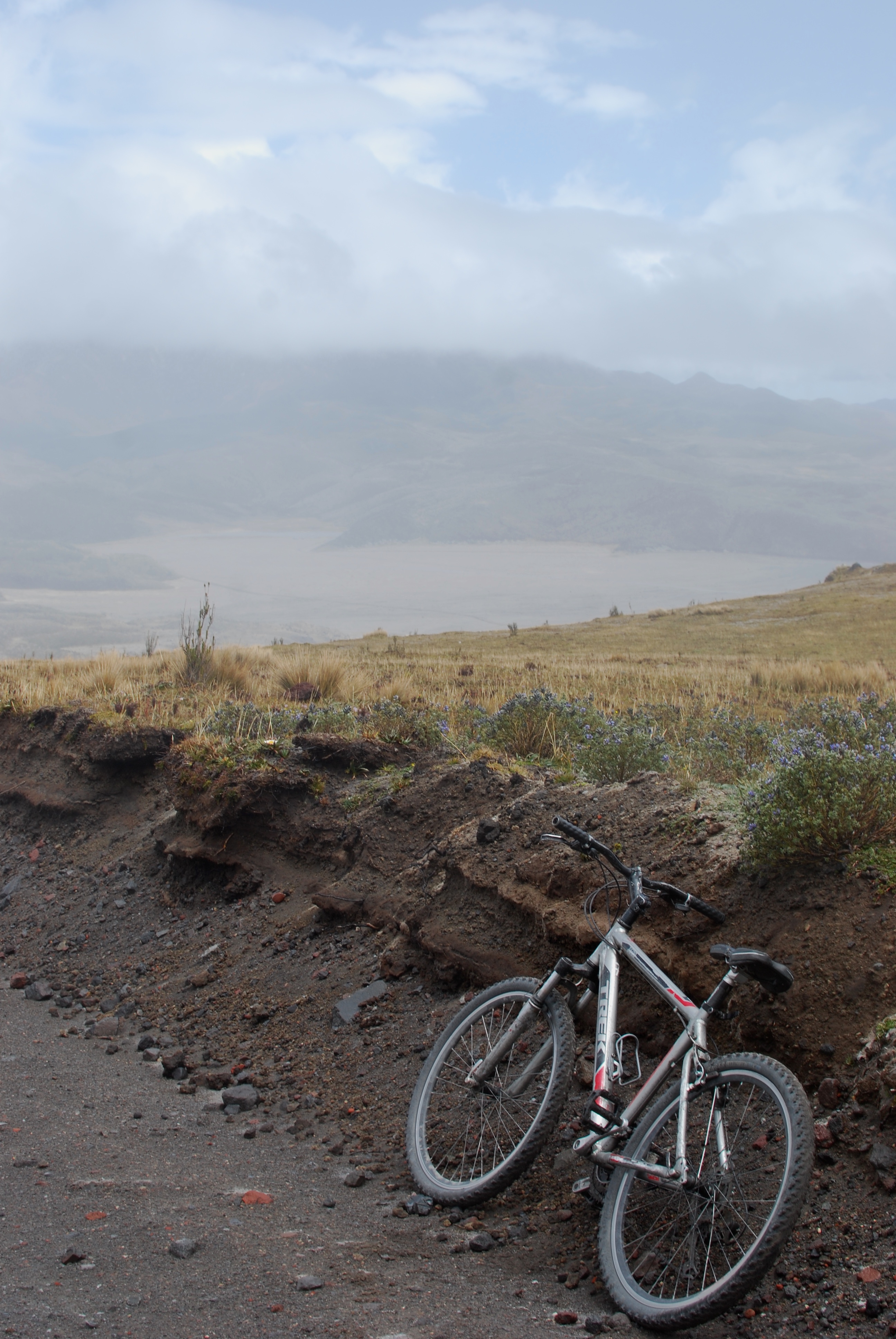
Biking down the Cotopaxi volcano.

Biking down the Cotopaxi volcano.

Freedom is a concept that has both enthralled and horrified humanity for its entire existence. It is hard to define because of its fluidity, its tendency towards subjectivity. It varies between ages (both historical and chronological), cultures, ideologies, individuals, and any other subcategory of the human race. In John Stuart Mill’s famous essay “On Liberty”, he describes it as such:

The only freedom which deserves the name, is that of pursuing our own good in our own way, so long as we do not attempt to deprive others of theirs, or impede their efforts to obtain it. Each is the proper guardian of his own health, whether bodily, or mental and spiritual.

Perhaps in its most compact, concentrated definition, freedom is simply the ability to choose.

Having spent the last almost 5 months traveling, for the most part on my own, freedom, my own personal definition and more importantly its consequences, has been on my mind a considerable amount of the time. I have never felt more free in my life and most days that is an amazing and incomparable feeling. But freedom is not a synonym for comfort. In my freeness, there have been times where I’ve been sure I was about to be kidnapped or worse, where I had no place to sleep, where I couldn’t wish for anything more than people who loved me to hold me in their arms and take care of me. Like I said a few entries back, freedom often comes at the expense of security. But from the best to the worst moments and everywhere in between, freedom is the overarching theme of this entire journey.

Let me give you a little insight into my past and present life: seven months ago I was working at a job I hated five days a week from 8:30 to 5, for bosses who wanted only my silence and obedience and often used humiliation as a means to achieve that end. I spent my days staring at a computer screen making spreadsheets and searching for decades-old paper documents in archives organized as well as Bogotá’s bus system (which is to say not at all). I made only enough money to cover my bills and the minimum payments on my credit cards. For my efforts, the most vacation I could hope to get was 10 days per year. Every single morning I woke up and thought desperately of any viable way that I could avoid going to work that day. Don’t get me wrong, my life was still pretty great, but free was not something I thought of myself as being. Despite living in a city I worship, with friends equally deserving of adulation, I felt trapped and unhappy at least 40 hours a week and that is no way to go through life.

Seven months later, I feel joyful almost every day. I wake up most mornings and I and I alone decide what to do with myself that day, or, if I am on some kind of schedule, it is because I chose to be. I often think that if I were to die right now (which of course I hope doesn’t happen for, say, 70 years), I would be absolutely content with what I have done with this one life. Even in my moments of bowel-gurgling fear or crippling loneliness, there is a revitalizing quality to knowing that I have willingly made the choice to be here, not out of some “responsibility to society” or obligation or some mindless and robotic forward motion, but because of a willingness to risk everything in the search for my own joy.

But freedom has a price, like everything. To be truly free, you can have no ties to people or places or things, or at the very least, you must accept that they will come second to your freedom. But I am not willing to give up the people I love in order to maintain indefinitely my freedom. I am not willing to think only of my own happiness at all times at the expense of the happiness of others. There are a relatively large number of people in my life whom, if they asked me to come back because they truly needed me there, I would drop everything and run to. But they have not asked and so the exhilaration of freedom continues to fill me like some euphoric stimulant. I know I said a few weeks ago that freedom means not always coming when you’re called and I still hold to that, but there are things that rival freedom and love is one.

When I was 19 I got a tattoo on my back of a swallow flying out of a gilded cage with “La Libertad” in script below it. At that time in my life, freedom meant living on my own, enjoying the fruits of preliminary independence. But freedom’s meaning for me has changed since then, become deeper, and in this moment, I believe freedom is the ability to take advantage of opportunities that come up unexpectedly. To be free means to rely on your own body and spirit and intellect to find your place in a world in which most people, for a variety of reasons, remain in the same place they have always been. As Dylan Thomas said in his story “The Peaches”, “I was aware of me myself in the exact middle of a living story, and my body was my adventure and my name.” Sometimes you are offered things which to decline would be akin to spitting at the feet of Fortune. Sometimes these opportunities are in direct opposition to your “plan”. Sometimes to accept would be to change your mind again and again, at the risk of seeming fickle or indecisive. Opportunity cares not at all for any of these things. You take it as it comes or it passes you by.

On that note, I’ve been offered a room in a beautiful house in Cuenca, Ecuador, in the same country that I wrote about being reluctant to leave last week.

I accepted.

Hasta La Próxima, Ecu

La Lobería, San Cristóbal, Galápagos

La Lobería, San Cristóbal, Galápagos

Parque Nacional de Cotopaxi, about an hour outside of Quito

Parque Nacional de Cotopaxi, about an hour outside of Quito

Ingapirca: Incan ruins outside Cuenca

Ingapirca: Incan ruins outside Cuenca

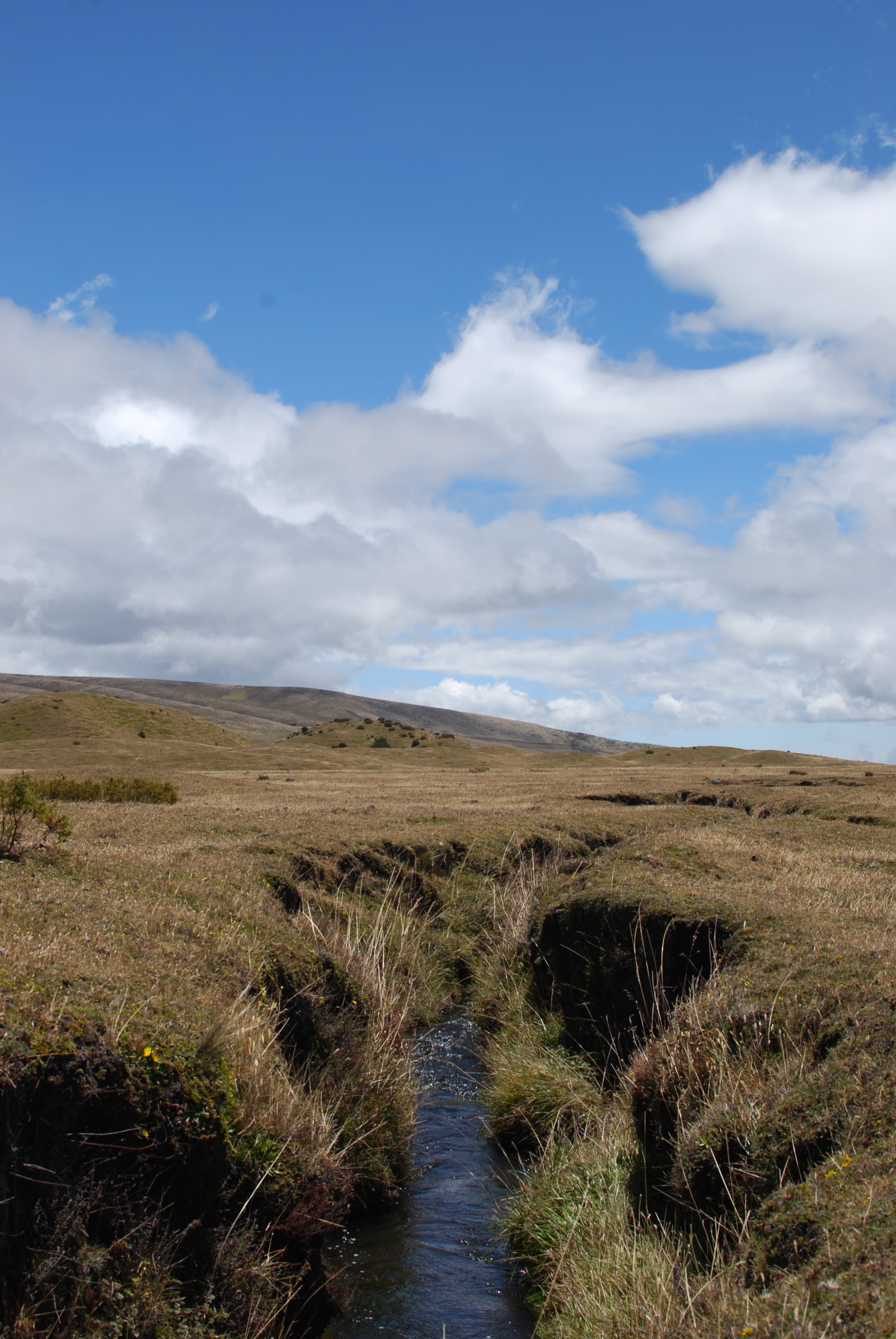
Parque Nacional El Cajas

Parque Nacional El Cajas

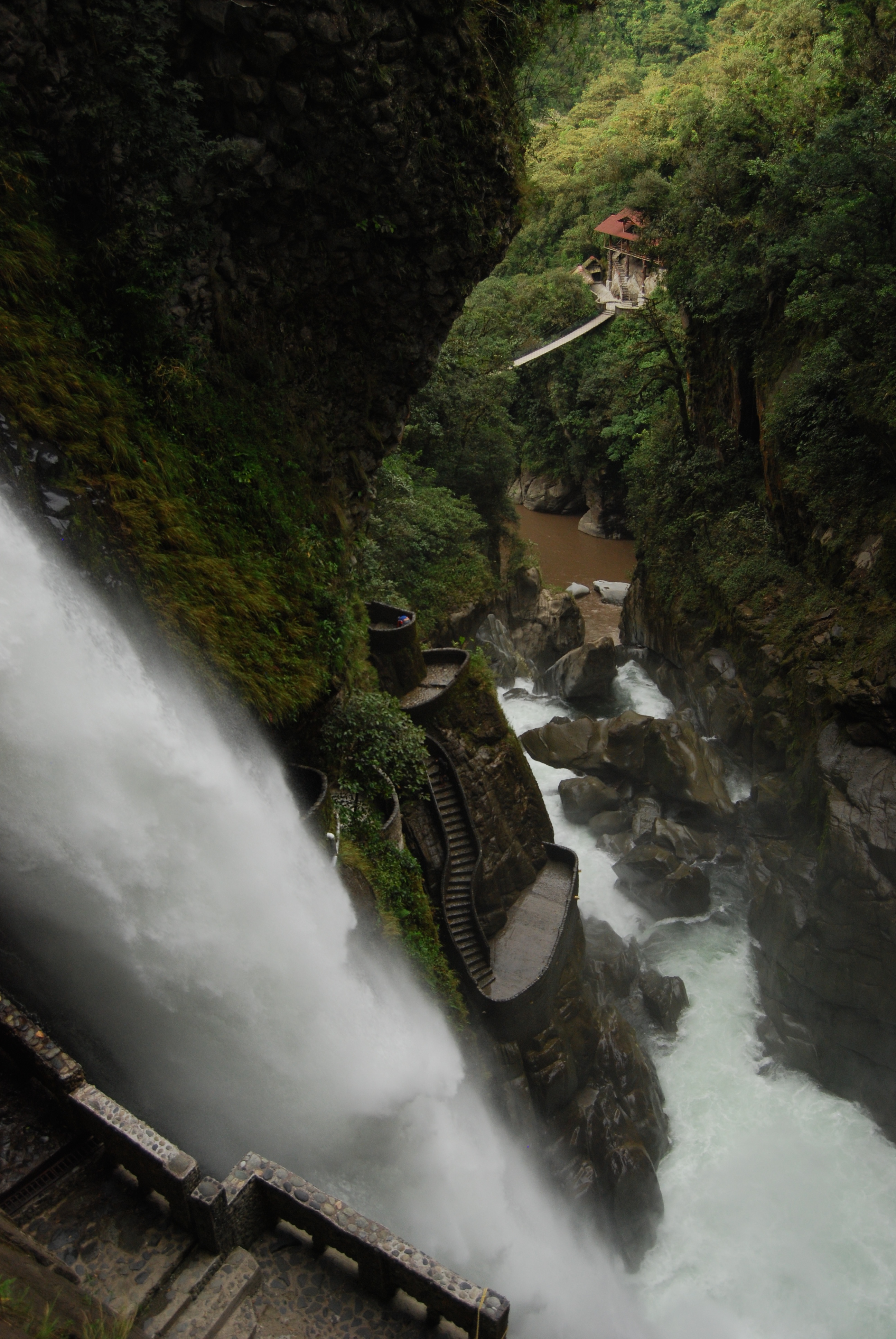
Waterfalls in Baños.

Waterfalls in Baños.

Isinlivi, the tiny town I ended up in when I fucked up doing the Quilotoa Loop.

Isinlivi, the tiny town I ended up in when I fucked up doing the Quilotoa Loop.

DSC_0082

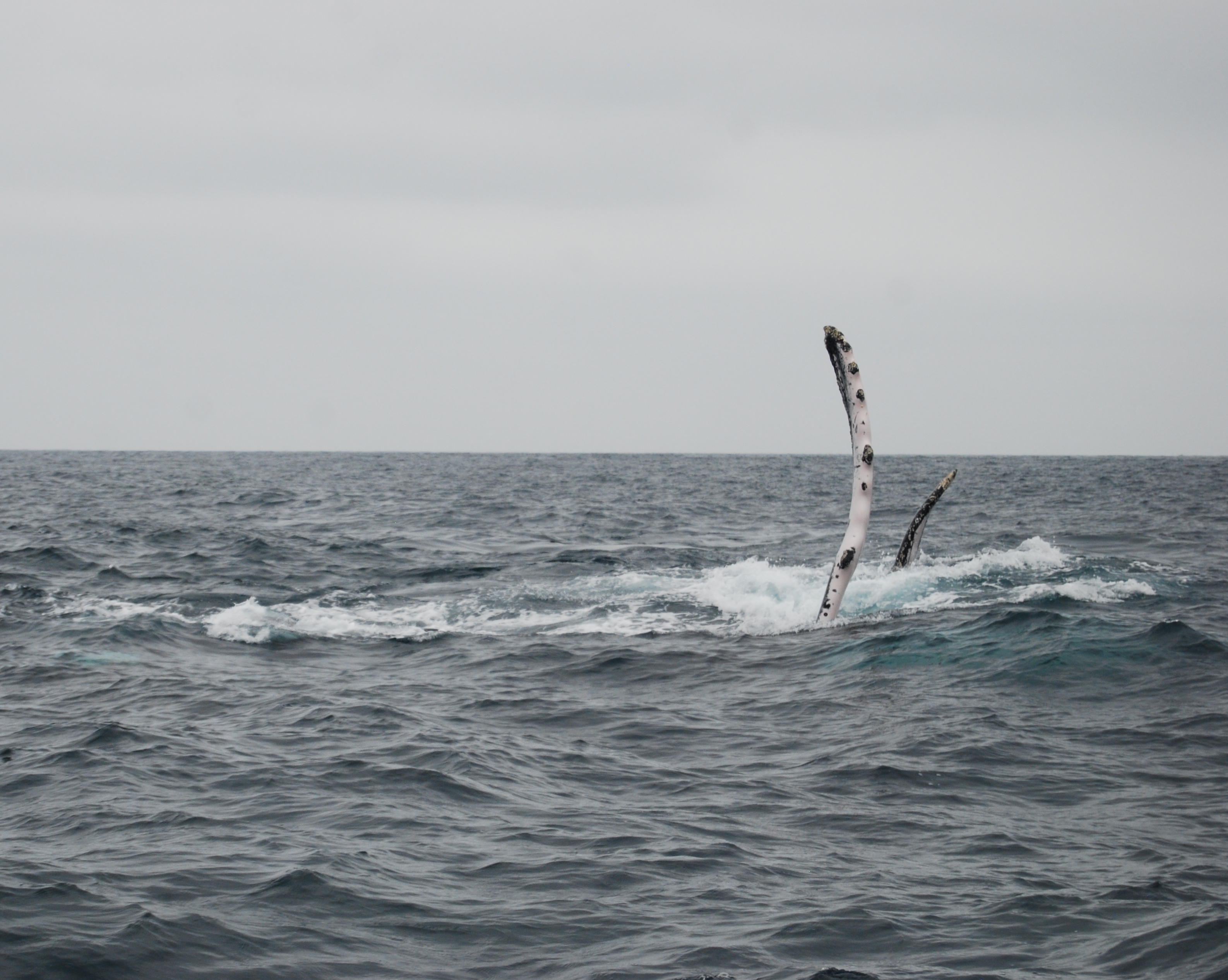
Whale watching in Puerto Lopez

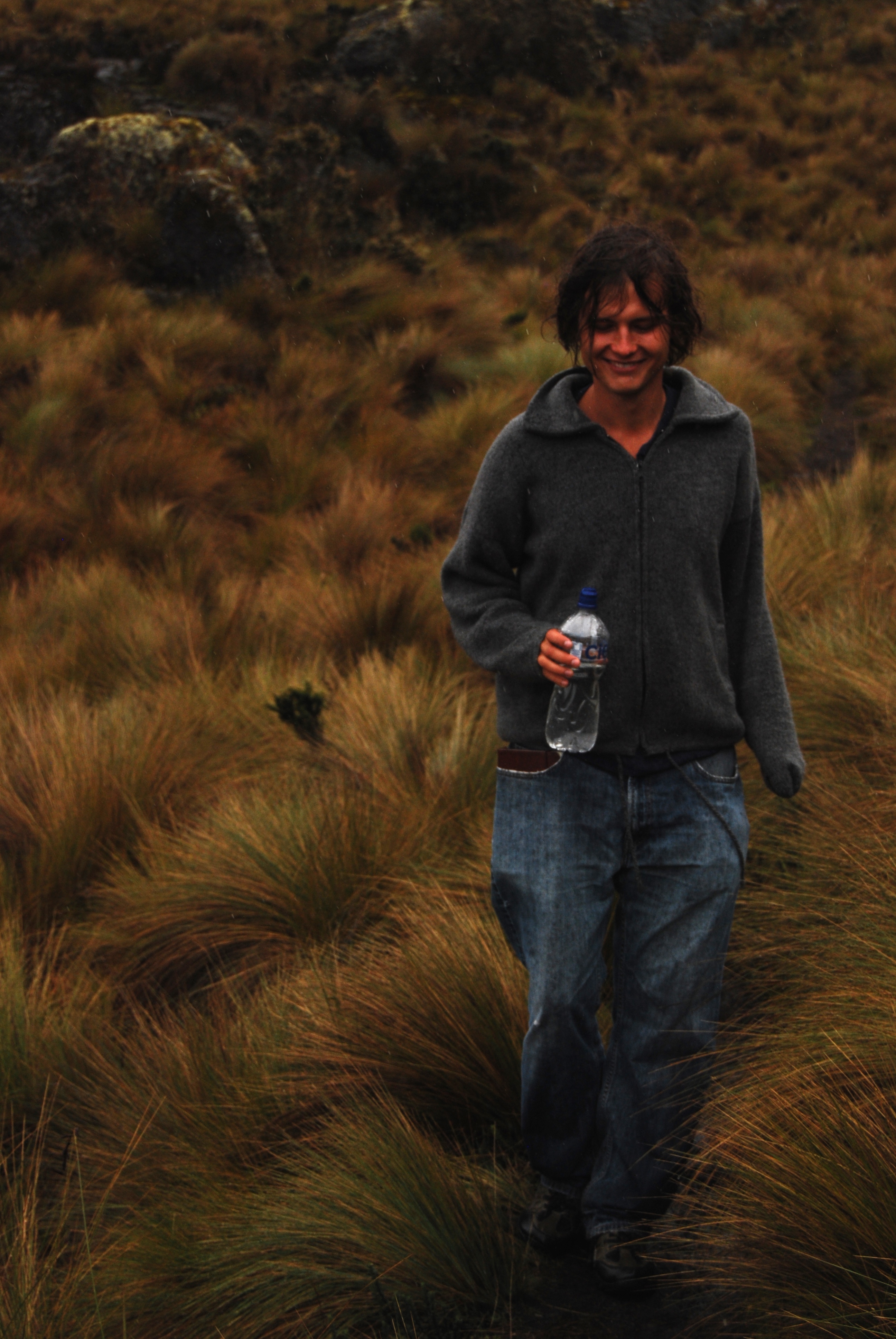
Robbie in El Cajas

Robbie in El Cajas

Volcán Tungurahua

Volcán Tungurahua

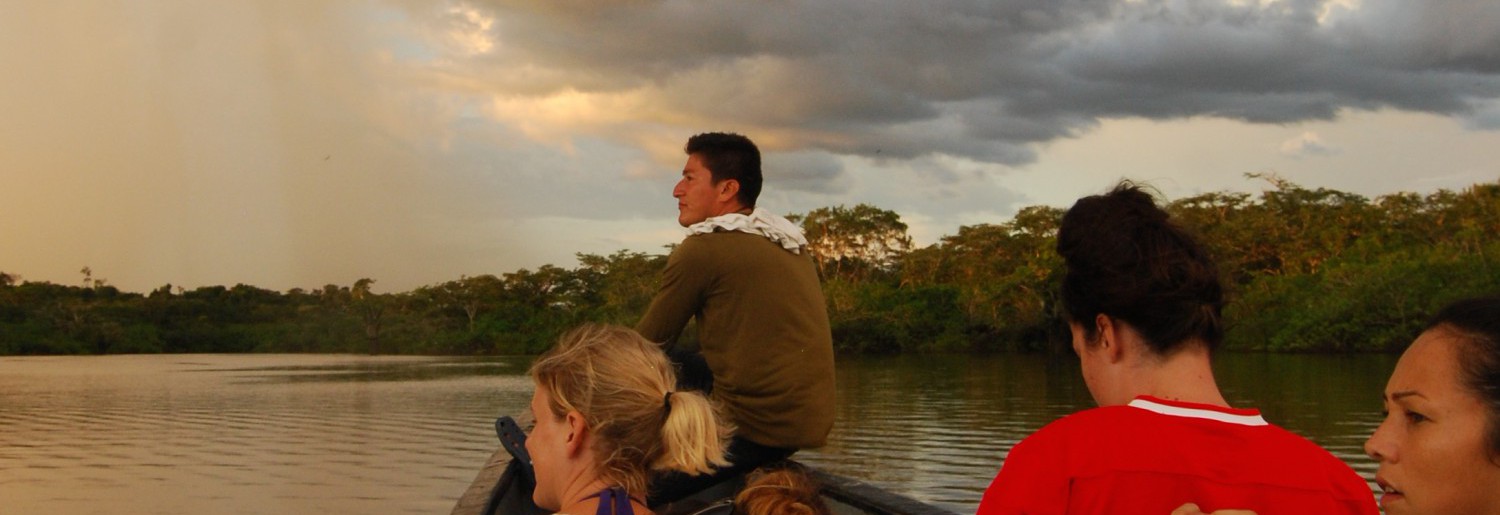
On the Cuyabeno river in the Amazon

On the Cuyabeno river in the Amazon

I had another big theme planned for this week, but I think I’ll ruminate on that one for a while longer and keep this simple. I’m finally leaving Ecuador. While originally planning my trip, this country was little more than the space between Colombia and Peru in my mind, and yet I’ve stayed here for three months, making it the country in which I’ve stayed the longest, regardless of the fact that it’s also the smallest. The only reason I’m leaving is because my tourist visa expires on Sunday. That, and my flight home leaves out of Lima.

I have loved every moment of my time here: the fuckups, the moments of anxiety, of awe, of absolute heartrending perfection, from sitting alone on the end of a rock jetty in the Galápagos to sitting in a beach bar playing Scrabble with expatriates to biking down a volcano. But everywhere I’ve been I have also been glad to leave, if only in delicious anticipation of the next unknown. Everywhere, that is, except for Cuenca.

I knew it as soon as I got here, which is why I extended my stay from a few days to a few weeks. Something about Cuenca struck some corresponding thing in me and it has continued to vibrate for the entire almost-month I’ve been here. I’ve only had this feeling once before, and that was Paris, a city which still inspires me, of which I still dream. There are many possible reasons for this: it reminds me of Querétaro (where I lived in Mexico), I have already found a niche in which I could be happy, and I have had more concentrated fun here than anywhere else…

All I know is that this will be the only place I’ve been in the last four months which will hold onto a piece of me when I leave it, a kind of nostalgic calling card to remind me of what I’ve left behind and what I could one day come back to if I choose. This will be the only city I move on from where I will feel as if I was saying goodbye to a long-lost friend whom time and circumstance were coercing me to abandon too soon.

La Güera Está Chuchaqui, Waxes Philosophical

IMG_2671One month from today I will be home again. What does that mean? I’ll be back in the world of things I love and miss like banh mi and espresso and toilet paper you can flush. But it also means I’ll be back in the world of making a living, having a schedule, responsibility. My landscape will go from one of infinite variation to a static, albeit beautiful (oh, California), familiar one. Once again, most of the people I love will be no more than a phone call and a quick drive away. But who will I be? Can you go home again? I don’t know the answer. But my mind is all over the place, so I thought I’d share some of the things that have taken up my thoughts for the last four months. Some are things I’ve learned. Some are things I already knew but have been reinforced by my travels. Some are just thoughts.

  • I think I may have given myself a terminal illness. I used to think I had wanderlust. Now I know I do as it has infiltrated my body and I can feel it in the tips of my toes and the angles of my elbows. Now I know what I’m capable of, what of the detritus in my life is luxury and what is necessity. I know that I don’t need anything more than what I can carry on my back. Now I may never be able to stay in one place again. I am sick, sick, sick with the  desire to explore, to experience and I don’t think this illness is curable, or if it is, if I would take the cure.
  • Traveling alone is lonely. In spite of all the people you meet, there are many moments when you find yourself wishing for people who have known you for longer than a few days or weeks. I sometimes feel the need for a deeper connection, for shared history. But I have learned that it is possible to be both incredibly happy and incredibly lonely at the same time. This to me is evidence that they are not connected, as we as a society tend to believe. Loneliness breeds with or without happiness. I am often in a state of absolute joy in spite of my loneliness.
  • Why do people always want to possess you? To put you in a box with a neat, handwritten label that says “mine”? Why can’t we love or like or want each other without trying to tattoo ourselves on each other’s skin? I want to exist simultaneously with someone, sometimes intertwined but more often separate, changing each other but also allowing each other to maintain our autonomy. I want to be completely myself and be with someone else. I don’t want to mute parts of myself in order to better mesh with someone else. I want to be me. With you.
  • Sontagian list:

Things I like: long-haired men, the ocean, beaches at night, street food, maracuya shakes, long bus rides, salsa dancing, scuba diving, beer, sleeping outside, warm nights, going braless, authenticity, uncontrolled tear-inducing laughter, dialects, braids, bartending, graffiti, sexuality, naps, nudity, being barefoot.

Things I don’t like: mind games, assumptions, double standards, creaking doors, desk jobs, sunscreen, blisters, beauty ideals, shaving, malaria pill dreams, men who leer, drama, unnecessarily loud noise, haggling, instant coffee, the “gringo” price, cold showers, reciprocity fees, chuchaqui, objectification.

  • Things I believe in:
    -That not all questions require answers. Sometimes the question is enough.
    -That reading allows you to live thousands of lives concurrently with your own.
    -That there is no limit to love. Love does not run out, but it can change, and it is our reticence to allow it to do so which causes it to rankle and become embittering instead of empowering.
    -That there is no fundamental difference between any human on the planet.
    -That spending time alone allows you to learn more about yourself than anything else, and what you learn isn’t always flattering.
    -That sharing happiness with others only multiplies happiness.
    -That allowing yourself to love and be loved is the bravest and most frightening thing anyone can do.
  • My vision of myself almost matches who I am.
  • Freedom comes at the expense of security.
  • Freedom is not always coming when you’re called.

Thirty days to go. This has been one of the most terrifying and rewarding experiences of my life. I am irrevocably and profoundly altered because of it. A lot can happen in thirty days, but what a wonderful feeling to know that at the end of it are people who long to see me as much as I long for them.

P. S. Chuchaqui is the Ecuadorean word for hangover.

The Sexuality of the Damsel Errant

DSC_0042

The “liberated woman,” like the “free world,” is a fiction that obscures real power relations and defuses revolution. How can women, subordinate in every other sphere, be free and equal in bed? Men want us to be a little free — it’s more exciting that way. But women who really take them at their word make them up-tight and they show it — by their jokes, their gossip, their obvious or subtle put-downs of women who seem too aggressive or too “easy.”
–Ellen Willis, from The Essential Ellen Willis

I have been wanting to write something about this for a while, but I’ve been waiting for the right words. Then last night I was going through my Instagram feed and Miley Cyrus had posted a photo of herself spread-legged in a leotard. No different than anything you might see on the cover of a magazine geared towards men. But instead of being lauded as a sex symbol, masturfodder if you will, like the women in those magazines, her comment feed was full of vitriolic words like “whore” and “slut” and “disgusting”. I thought about the way Miley is denigrated because she dresses sexually all on her own, not just in order to please the male eye. About how women in general who wrest their sexuality from the humbug hands of the patriarchy are laughed at, held under humiliating scrutiny, while their male counterparts are free to bed, wed, or impregnate as many women as they like, the only consequence being that they become a paragon of masculinity. How is it that women in the 21st century still allow such a blatant double standard to hold sway over us?

Sex is something that is demonstrative of who we are as people, not in any absolute way, but our attitude towards it is definitely a window into how we view ourselves and the people around us. On both a global and national scale, female sexuality remains a subject that is generally suppressed, left out of the conversation, discouraged, while male sexuality is celebrated. A large part of the (eurocentric) literary canon I grew up with and studied in my adulthood involved the archetype of a man wandering the world in search of adventure and intrigue. This journey almost always included the conquest of women, often lots of women, which bolstered his masculinity, desirability, and value, while diminishing that of the women. Often he leaves “ruined” women and children scattered behind him, something that was often a source of pride although the children were rarely treated as legitimate. We have the exciting stories of Lancelot, Henry VIII, even Dracula.  But where were the stories about women doing the same? Growing up, what female character was I supposed to look up to and model my own ideas of sexuality after? Let’s look at the characters offered up in school during my especially formative years: Hester Prynne from A Scarlet Letter (can I just “ugh” right now and get it over with?), Rose of Sharon from Grapes of Wrath, Daisy from The Great Gatsby, the famous Juliet? None of those are exactly success stories of female sexual independence. The closest thing I got in school, admittedly one of my favorite female protagonists of all literature, was Edna Pontellier from The Awakeningbut she, well, kills herself because society can’t accept her sexual autonomy. So, case in point.

As all of you Americans (U.S.A. Americans, specifically) should know, women’s sexuality is under siege in our country. Hard-won rights like access to birth control, safe abortion, and even something as simple as sex education are being stripped away from us. In Colorado*, a bill is on the table that claims to “protect” pregnant women but would really criminalize abortion (actually anything but a live birth), including in the case of rape, and make birth control like the pill and the IUD illegal. In California, bills were just passed to legally make “yes mean yes“* meaning consent is no longer the absence of no and also to stop the forced sterilization* of women in prison. The fact that these bills were passed is good, the fact that they are necessary is proof of a far more deep-rooted sickness. Texas Attorney General Greg Abbott said the fact that a recent bill has shut down 80% of abortion clinics in his state is but a “minor inconvenience“* for women. Anyone seeing a problematic pattern forming here? But before I go off on a serious feminist jeremiad against my country, let me get to the point of this entry: I am a single woman. I have sex. I enjoy it. I deserve and demand the right to decide what is good for my own body and the life I lead, regardless of where I choose to lead it.

As you know if you’ve been following this blog, I’m currently about 80% of the way through a 5-month trip through Colombia, Ecuador, and Peru. And although my country is imploding with abuses against the rights of half of its population, at least there’s some kind of conversation going on. For the most part, South America has not joined in that conversation. The only countries on this continent in which abortion is legal, for example, are Guyana, French Guiana, and Uruguay (go Uruguay!) while Chile, Brazil, and Venezuela have made it illegal in all cases, including rape. The rest have made it available only in case of the vague purpose of “preserving a woman’s health”, a restriction which unfortunately has little to do with what the woman considers her “health”. For more info (and a reality check), this world map of abortion laws is pretty terrifying.

In a more micro sense, I can tell that my views of sexuality, my sexuality to be exact, do not quite mesh with the sexuality projected onto me by the cultural norms here (or in my own country, to be fair). My view on sex is this: It is acceptable whenever there is consent between two adults, not to be restricted to society’s expectations of having to be in some kind of relationship. I’m pro-monogamy, -polygamy, -heterosexual, -pansexual heteroromantic, -bisexuality, -homosexuality, -asexuality, -transsexuality, -friends with benefits, -one night stands, -just met five minutes ago and have to fulfill some crazy urge that is mutual and never see each other again (see zipless fuck)… and much more, but I think you get the picture. If there’s consent between adults, I support it. Whether or not I engage in any of these things is beside the point and none of your business.

I am a woman traveling alone. The sexuality that society has condoned for me is that of being a sexual object, one to which it is ok for men to jeer and catcall on the street; one in which while dancing, a man thinks it is ok to reach up and grab both my breasts (I’m assuming he thought my allowing him to bump himself against me meant I was one big “YES”); one in which a man with whom I spent very little time thinks it’s ok to ask me if I’ve “cheated” on him; one in which the most common question I receive is “are you married?” or “do you have a boyfriend” or most importantly “why not?” because that is what is expected of me. The fact that I might be my own sexual actor, in which I make my own decisions about when and with whom I sleep, is not to be considered. The archetype of the Latino male is one I and everyone I know is familiar with: macho, virile, romantic, fertile as fuck. The archetype available to me from the current material is not quite so… debonair.

That’s why I’m writing this. We need to move forward, not backward (I’m talking to you, especially, you American politicians who claim to represent me). It’s so far past time for women to be afforded the equal rights to everything, including sexual independence, as men that it’s not even laughable, it’s downright pathetic. I’m tired of keeping quiet about who I am and what I believe when it comes to sex because instinctually I know that I will be judged for it according to other people’s prejudices. There comes a time in everyone’s life when you have to accept that people will judge you no matter what you do or what face you try to put on to fit in. You will be judged. It isn’t fair, but that’s the way it is. So there’s a choice you have to make: are you going to let other people tell you how, where, when, and to what degree you can be sexual?

I think it’s time we start a new canon of female archetypes, although, granted, it’s not so easy for a woman to leave children like breadcrumbs stretching away behind her. Regardless, we as women need to remember that we are the hero of our own story, we aren’t some damsel in distress, and we do not need to be rescued from our own sexuality.

*click through to go to article.

Each Choice a Path, Each Decision a Catalyst

DSC_0203

Two roads diverged in a yellow wood…

And sorry I could not travel both

And be one traveler, long I stood

And looked down one as far as I could

To where it bent in the undergrowth…

I carry words with me wherever I go. My experiences are filtered through a lens of things I have read, scraps of poems I’ve memorized, sentences in otherwise forgotten paragraphs. It is because of this quirk that this Robert Frost poem has been bouncing around my brain the last few days, as I decide each day where I’ll go, where I’ll stay, how I’ll spend my time. The decisions of a vagrant. It is a poem that has become a symbol in the American mind, one that most of us have read or, at the very least, heard mentioned in a presumably “life lesson” tone of voice. One day you will have to decide between two important things, I imagine that conversation going. And the one you choose will define the rest of your life. I no longer believe this, if I ever did. I don’t believe that there are a handful of big decisions that define us, or, at least, I don’t believe in the simplicity of that statement.

Lately I’ve been thinking a lot about choices I’ve made, both recently and far, far back in the irremediable past, trying to sift the important ones from the much more numerous “unimportant” ones, trying to look at the road not taken and see how far down that road my imagination can take me. Where would I be if I hadn’t chosen to switch high schools after freshman year, for example, thereby meeting my first non-white, spanish-speaking friends? (If you know me, you know why this is important.) Or if I hadn’t gotten fired from that damn toy store and chosen to accept a position as a server at Joe’s Crab Shack (equally damned but for the amazing friends I made there)? Or if I had gone to school in Santa Barbara or New York instead of San Francisco? If Adri hadn’t invited me to Cartagena for her cousin’s wedding, thereby forcing me to finally decide Yes. I will travel. Now. Who would I be? Or where? Or with whom?

… Then took the other, as just as fair,

And having perhaps the better claim,

Because it was grassy and wanted wear;

Though as far as for that the passing there

Had worn them really about the same

In my little world, the way people reacted to my traveling alone through South America made me feel like I was special, brave, like I was choosing the path that wanted wear. Maybe I am. Maybe I did. But now, having met so many people out in the world who are doing the same thing as I, to a greater or lesser degree (quantitatively, not qualitatively speaking), I see that I am one of many. That due to a series of choices each individual has made, somehow we have all ended up in this part of the world, our belongings strapped to our backs, our hearts open by necessity to the possibility of the unknown. Sometimes it’s comforting to realize that you’re actually not so special, because it means that there are others like you, who feel the same gravitational pulls to places they’ve never seen, whose feet also burn from walking the same pavement over and over again.

… And both that morning equally lay

In leaves no step had trodden black

Oh, I kept the first for another day!

Yet knowing how way leads on to way,

I doubted if I should ever come back…

Each decision I make here, while traveling, makes all the difference in the world. Something as small as where to eat lunch can leave an indelible mark on everything that follows. Even unto the exact moment I arrive somewhere can point me down an unexpected path. Each person I meet, each landscape I see, each new and relevant thought I have, is a result of an infinite number of tiny decisions that I have made, mostly, automatically.

To give an example, on Wednesday night I walked into my hostel in Cuenca at approximately 8:45 at night. The man who held the door for me to lumber through (when I have my backpack(s) on I suddenly understand on a molecular level the phrase “bull in a china shop”) ended up asking if I wanted to join him and his friends to go salsa dancing that night. I said yes (almost automatically). Because of this, I met his friend who I later ended up spending a good amount of time with, who turned out to be an itinerant Colombian artist and jewelry-maker. In the buzzed ebullience that came from two loaded gin and maracuyá cocktails, I excitedly and without provocation whipped out the quartz crystal my mom had bought me in Salento, Colombia, for protection (which, despite my skepticism may be working as I haven’t been mugged since). He took it from me and the next day presented me with a beautifully-wrought wire wrapping with the quartz in the middle, strung on a necklace. Each of these decisions, had I made them differently, would have led me somewhere else, with unforeseeable consequences, either good or bad. These are the small things, but each one is entirely dependent on a seemingly meaningless series of decisions. This is what people call fate. I don’t buy into such lofty and romantic ideas of serendipity, but I can understand the allure of believing it.

… I shall be telling this with a sigh

Somewhere ages and ages hence:

Two roads diverged in a wood, and I–

I took the one less traveled by

And that has made all the difference.

I had grandiose ideas about this trip before I left: of tongue-in-cheek apotheoses, of love (physical, spiritual, geographical), of awe-struck silences. Like all expectations, these both romanticize and fall laughably short of the truth. But if I am sure of nothing else, I am sure of this: each decision, no matter how small, that I have made, whether it was to take the road more or less-travelled by, I am who I am because of it. Each choice I make reverberates, like billions of infinite strings of light, into the future. Each thing I say, do, think, has changed the trajectory of my life and will continue to do so. Every second that passes in which I do this instead of that, ensures that nothing will ever be the same.

Guayasamín and Galeano Tell the Story of the Indígenas

In exchange for the skins, the Indians get weapons to kill each other, or die in the wars between Englishmen and Frenchmen who dispute their lands. The Indians also get firewater, which turns the toughest warrior into skin and bone, and diseases more devastating than the worst snowstorms (Faces and Masks, Eduardo Galeano: 1717: Dupas Island, The Founders).

“Tears of Blood”

According to Le Jeune, they do not like working, but they delight in inventing lies. They know nothing of art, unless it be the art of scalping enemies. They are vengeful: for vengeance they eat lice and worms and every bug that enjoys human flesh. They are incapable, Biard shows, of understanding any abstract idea. According to Brébeuf, the Indians cannot grasp the idea of hell. They have never heard of eternal punishment. When Christians threaten them with hell, the savages ask: And will my friends be there in hell? (1717: Dupas Island, Portrait of the Indians)

Photo Credit: Raising Miro

[The Indians] recognize themselves in Jesus, who was condemned without proof, as they are; but they adore the cross not as a symbol of his immolation, but because the cross has the shape of the fruitful meeting of rain and soil (1774: San Andrés Itzapan, Dominus Vobiscum)

Photo Credit: El Proyecto Matriz

Absence is punished with eight lashes, but the Mass offends the Mayan gods and that has more power than fear of the thong. Fifty times a year, the Mass interrupts work in the fields, the daily ceremony of communion with the earth. For the Indians, accompanying step by step the corn’s cycle of death and resurrection is a way of praying; and the earth, that immense temple, is their day-to-day testimony to the miracle of life being reborn. For them all earth is a church, all woods a sanctuary (1775: Guatemala City, Sacraments).

Photo Credit: El Proyecto Matriz

Count Buffon says…that the Indians, cold as serpents, have no soul, nor fire for females. Voltaire, too, speaks of hairless lions and men, and Baron Montesquieu explains that warm countries produce despicable peoples. Abbé Guillaume Raynal is offended because in America mountain ranges extend from north to south instead of from east to west as they should, and his Prussian colleague Corneille de Pauw portrays the American Indian as a flabby, degenerate beast. According to de Prauw, the climate over there leaves animals sickly and without tails; the women are so ugly that they are confused with men; and the sugar has no taste, the coffee no aroma (1780: BolognaClavijero Defends the Accursed Lands).

Photo Credit: Final Portfolio

José Antonio de Areche, representative of the king of Spain (as he interrogates and torches Túpac Amaru): Deny it!… You have promised freedom … The heretics have taught you the evil arts of contraband. Wrapped in the flag of freedom, you brought the crudest of tyrannies. (Walks around the figure bound to the rack.) “They treat us like dogs,” you said. “They skin us alive,” you said. But did you by any chance even pay tribute, you and your fellows? You enjoyed the privilege of using arms and going on horseback. You were always treated as a Christian of pure-blooded lineage! We gave you the life of a white man and you preached race hatred. We, your hated Spaniards, have taught you to speak. And what did you say? “Revolution!” We taught you to write, and what did you write? “War!”…. You have laid Peru waste. Crimes, arson, robberies, sacrileges… You and your terrorist henchmen have brought hell to these provinces…. How many thousands of deaths have you caused, you sham emperor? How much pain have you inflicted on the invaded lands?…. The Incas… No one has treated the Indians worse (1781: CuzcoSacramental Ceremony in the Torture Chamber).

Photo Credit: Latin American Art

According to the bishops, pulque is to blame for laziness and poverty and brings idolatry and rebellion. Barbarous vice of a barbarous people, says one of the king’s officers. Under the effect of the maguey’s heavy wine, he says, the child denies the father and the vassal his lord (1785: Mexico City, Pulque).

grito(1)

The mulatto Ambrosio, who belongs to the commander Nieva y Castillo, was denounced to the authorities for having committed the crime of learning to read and write. They flayed his back with lashes as a lesson to those pen-pushing Indians and mulattos who wish to ape Spaniards (1804: CatamarcaAmbrosio’s Sin).

confluencias_portada_guayasamin

Great fortunes in a few hands, thought Mariano Moreno, are stagnant waters that do not bathe the earth (1811: Buenos AiresMoreno).

guayasamin_ninollorando

On the headlands of the Quequay, General Rivera’s cavalry have completed the civilizing operation with good marksmanship. Now, not an Indian remains alive in Uruguay. The government donates the four last Charrúa Indians to the Natural Sciences Academy in Paris…. The French public pay admission to see the savages…. From the shape of their skulls, they deduce their small intelligence and violent character (1834: Paris, Tacuabé).

Guayasamin0001-2-M

For the southward and westward growth of the great estates of the pampas, repeating rifles empty out “empty spaces.” Clearing savages out of Patagonia, burning villages, using Indians and ostriches for target practice… (1879: Choele-Choel Island, The Remington Method).

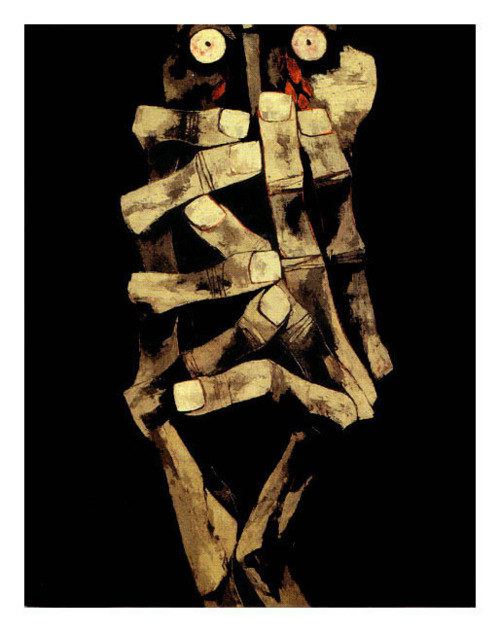
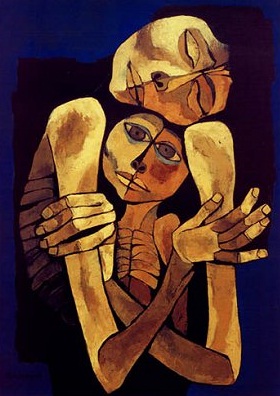
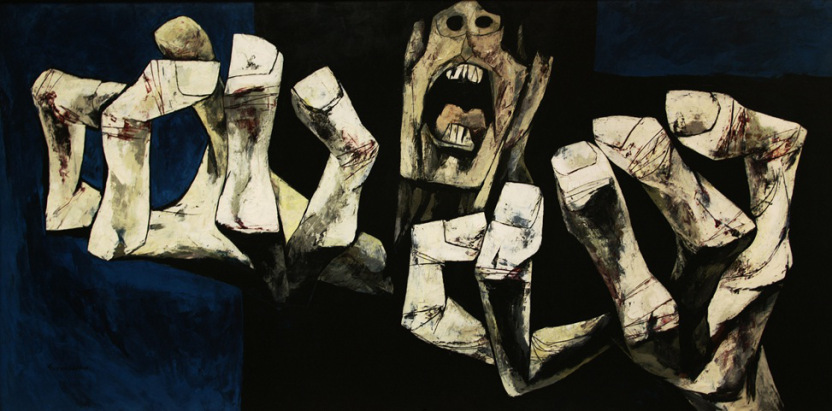
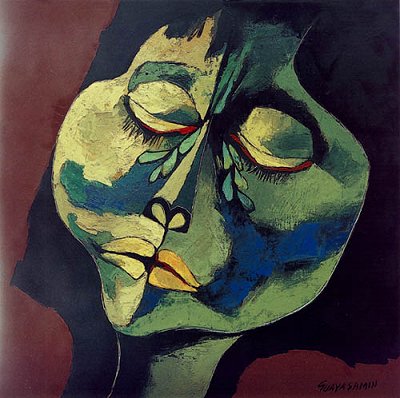
I am not often moved by fine art. This is not to say that I don’t see the beauty in art, but seldom do I feel anything amounting to more than an aesthetic appreciation. But every once in a while, I look at an artwork and it moves me with an almost physical force. It happens so rarely that I can remember each time it happened, like the piece that will one day be tattooed on my body that I saw in the Petit Palais in Paris. But I don’t think I’ve ever encountered an artist whose entire body of work affected me, which is what happened when I walked into the Capilla del Hombre in Quito, Ecuador, the museum that houses much of the work of Oswaldo Guayasamín, the art you see in this post.

Painting is a form of speaking while also screaming. It is an almost physiological attitude and the highest consequence of love and of solitude. That is why I want that everything be clear, that the message be simple and direct. I do not want to leave anything to chance; each figure, each symbol, must be essential; because a work of art is the unceasing search for the self that is like the others but similar to none. (Oswaldo Guayasamín, my translation)

Looking at his portraits of indigenous men, women, and children made me an implicit but impotent audience to their screams and cries, a sympathetic but ultimately removed witness to the injustices committed against them. Looking at the brushstrokes that were their eyes, I thought of Eduardo Galeano’s words. Staring into their disjointed, pain-warped faces, I felt for a moment connected to the river of blood that continues to carry the histories of the indigenous peoples of the Americas, and the histories of the rest of us, too.

On Tastebuds Well-Traveled

Mojarra frita in Santa Marta, Colombia

Mojarra frita in Santa Marta, Colombia

Panela con queso in Medellín, Colombia

Panela con queso in Medellín, Colombia

IMG_2454

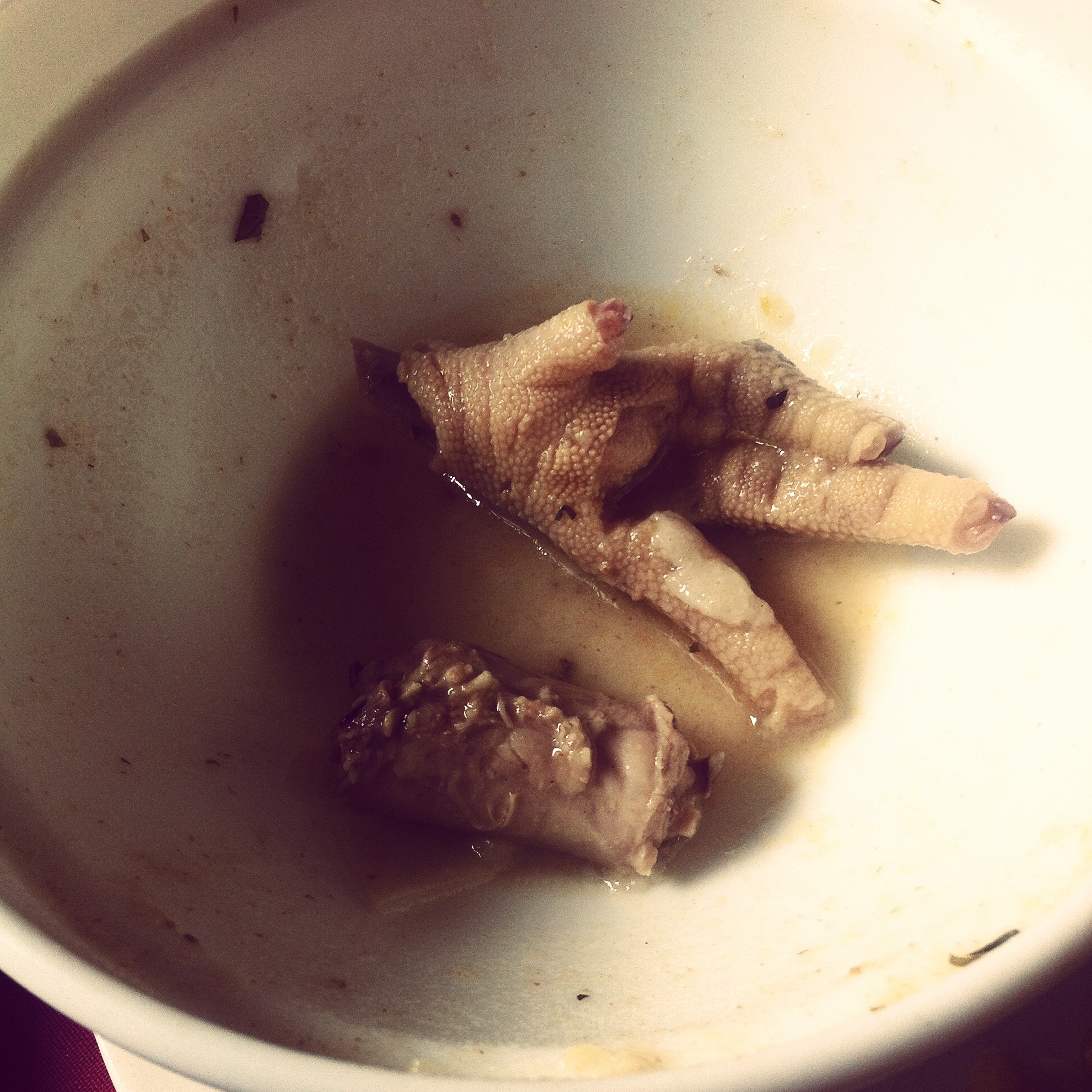
Some parts I found floating in my soup in Puerto Baquerizo Moreno, San Cristóbal, Galápagos

IMG_2551

Fried corvina with ceviche de concha in the Mercado Central, Quito

DSC_0027

Colombian tamales in Santa Marta

IMG_2554

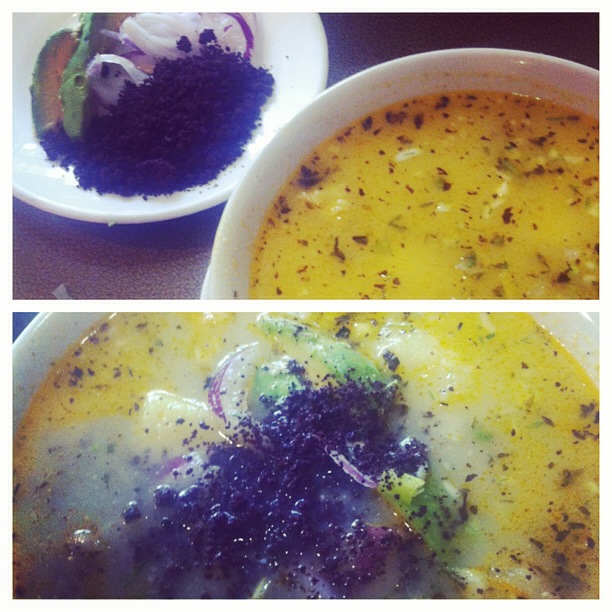
Yaguarlocro, or pig’s blood soup, in Quito’s historic district.

Some people travel to see new things. Some to break from the routine of their everyday lives. Others to cross something off of their bucket list. For me, it’s all these things and more, but to a large degree, I do it for the food. And while I consider myself an adventurous eater at home, I step it up a notch when I’m traveling. You can blame it on gustatory FOMO. My mindset is this: put it in your mouth first, ask about it later. Why? Because as disgusting to American ears as blood soup may sound, acting on that assumption may cause you to miss out on some serious deliciousness. Anyways, if everybody else is eating it, generally the worst that can happen to you is a time-sensitive trip to the restroom, something I affectionately call Gnarlytown. Usually the worse that’s going to happen is you simply won’t like it, which was the case when I treated myself to a $2.50 bowl of pig skin soup (the taste is fine, but I’m just not into the texture). But whatever the potential hazards may be, the rewards far surpass that.

So like I said, just put it in your mouth. Thank me later.

The Traveler’s Privilege

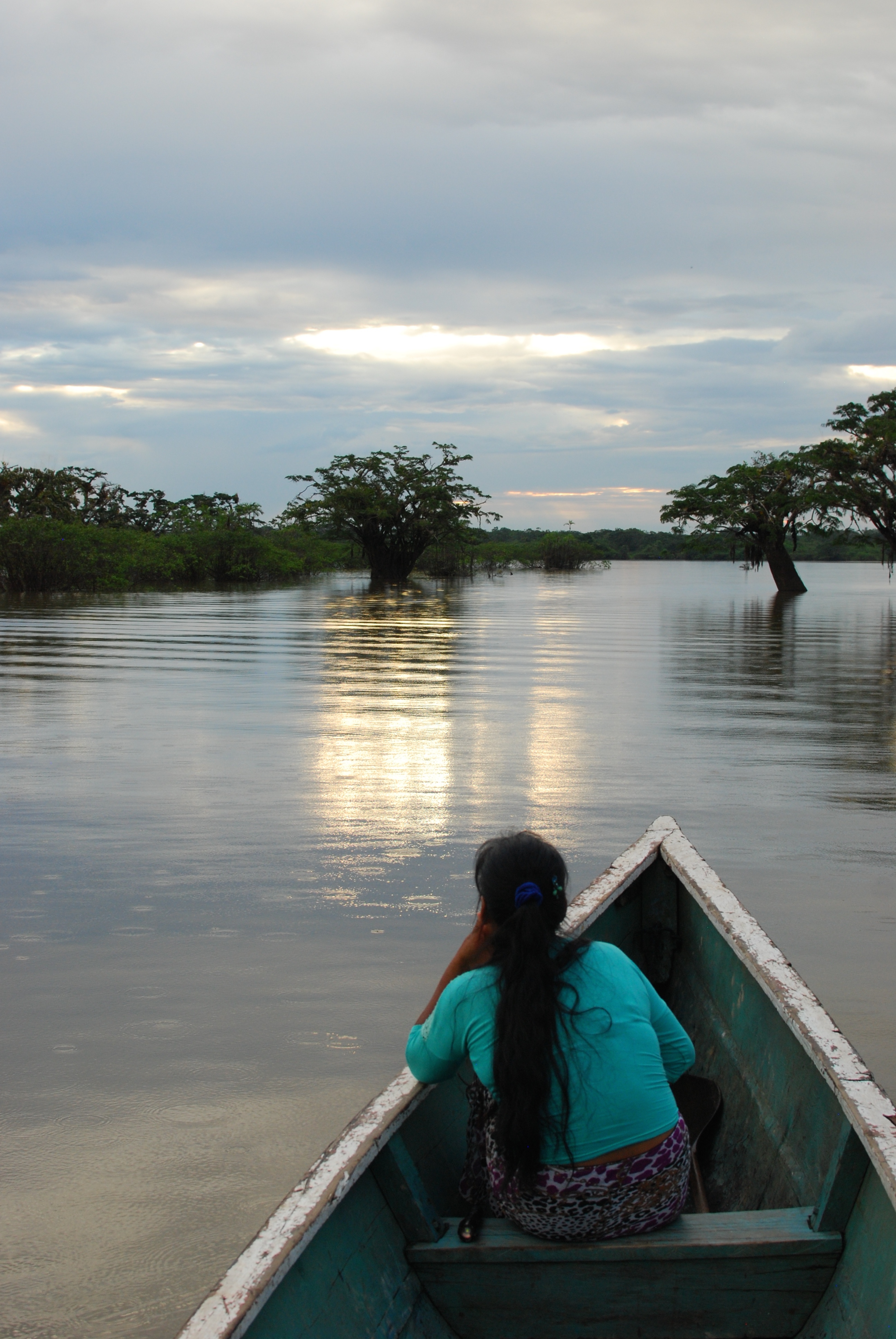
Canoeing down the Cuyabeno River in the Ecuadorean Amazon.

Canoeing down the Cuyabeno River in the Ecuadorean Amazon.

Growing up, travel was something which was all but taken for granted. Early on, we generally just tagged along on my dad’s business trips to San José, but we also made trips to New Mexico or Western Canada or Tijuana. We went to visit friends and family in New York and Seattle. We made monthly trips during the ski season to Mammoth Mountain and almost every summer we went camping in Big Sur, which continues to be one of my favorite places on Earth. After my parent’s divorce, my mom stepped up her game and took us to Hawaii and Costa Rica, then she started trading her house with people in Ireland and France and Italy. My dad and stepmother took us on a safari to Kenya and Tanzania. I think my brother and I both realized that most of our friends weren’t traveling like this, but I am sure, as children and even into young adulthood, that we had no appreciation of just how privileged we were to be doing it.

I got my travel bug from my mom. Like me, you won’t hear her saying “maybe one day when I have money”. Instead, we find a way to make it happen as soon as humanly possible. Hence, my setting off for South America with less than $2,000 in my bank account. For me, it’s not scary to drop everything and run headlong into the unknown, but as I’ve been traveling these last few months, talking to other travelers as well as locals in the places I’ve visited, I’ve started to realize something: I am not necessarily stronger or more special or independent or adventurous than anyone else. What links me to the majority of my fellow travelers and separates me from many non-travelers is that I have led a life of privilege.

It’s taken me a long time actually, to identify, understand, and finally accept (and truly be grateful for) the kinds of advantages I have had in my life due to, for example, my family’s socioeconomic status as well as the amazing support I have received from them over the years, the country and specific place I was born in (Southern California), the things my parents taught me about being open-minded and tolerant to all people, and even (and sometimes especially) the color of my skin. For a long time I railed against what people called my “inherent privileges”. How could I be in any way held accountable for things I have no control over? I didn’t choose my family or my genes. I was born into it. But after years of talking to other people about it, reading books about people who both have and had not had privileges like me, and especially after traveling a significant chunk of the Western world, I’ve finally accepted the truth of it and consequently made it into a base from which I can delve a lot deeper into the world around me.

This is my blog. No one is paying me to write it. It is a place where I can share what I learn while I travel, but it is my opinion and should not in any way be taken as my assertion of some kind of universal truth. But I have noticed that my fellow travelers mostly come from similar backgrounds and the explanation I have come up with is this: Most people who can afford to travel the world come from first-world countries, and specifically countries that for hundreds of years were serious imperial powers. I’m talking colonialism, here, and not just the last few waves of colonialism, but stretching back centuries. Again, I don’t have research to back this up so for now we’re going to call this a personal observation, but most people I’ve met traveling who also have had the opportunity of leaving their jobs and friends and families to explore the world come from a pretty restricted number of countries including, but not limited to, the United States, England, France, Spain, Germany, and Italy. I would also like you to keep in mind that the national makeup of travelers varies from destination to destination, so here I’m talking specifically about Latin America. The point is, however, that I almost never meet travelers from Asia, Africa, or Latin America itself. When I meet a Colombian or a Mexican or a Peruvian in Ecuador, for example, they aren’t traveling, but working (again, this is not meant to be a blanket statement. I met a guy in Otavalo, Ecuador who made the amount of the world I’ve seen laughable.). To me, this is a seldom discussed consequence of the far-reaching effects of colonialism.

As for why this is, I’m not going to go into it much here because I do think it is something which deserves a little research before I start blurting out reasons think people from these latter countries do not travel nearly as much as their Western counterparts. I also want to point out that I’m not saying it’s easy for people from the former countries to travel. I know personally that it can be very difficult to save a bit of your paycheck each month in order to travel. But when I explain this to people here in Ecuador and Colombia, about how much money I left with and how I saved it, I am often met with a look of polite bewilderment. For me, $2000 is a lot of money. For some of the people I talked to, it is months of feeding and taking care of their families. The fact that for me this is “extra” money is dumbfounding to them.

I firmly believe that traveling can teach you more about yourself and the people with whom you share this tiny, blue dot than anything else, be it reading or watching National Geographic or exploring the ethnic micro-neighborhoods in your city. There is absolutely nothing that can match it. Traveling gives you empathy and compassion for people whose lives are much more limited and difficult than yours. It reinforces the truth (one that has evaded humanity for its entire existence) that no matter the skin tone, height, skull size, clothing, degree of health or ability, language, or average yearly income, we are all exactly, one hundred percent the same amount of human, with the same basic needs and that we all deserve the exact same amount of respect. We all deserve to be free of exploitation and of the violation of our rights as human beings. Which brings me back to my point: I believe that travel should be more than a privilege. It should be a right. Call me an idealist, I really don’t care. Travel is just as important in the grand scheme of things as national history or economics or biology. Schools shouldn’t focus single-mindedly on expanding the capabilities of the mind, but also on developing the potential of the heart, and nothing will do that like travel can.

Look around you. Look at ISIS in the Middle East, look at Israel’s conflicts with Pakistan, at the U. S.’s political involvement in a little too much of everything, at Ukraine’s struggle with Russia. Yes, we need diplomacy and yes, we need political and economic advisers, but I think we could do with a great deal more heart in all these problems. A fundamental issue with at least my country’s dealings with other countries, in my opinion, is that we do not see their people as being on the same plane of existence as us; they are other, we are American. My argument is simply this: we are all human.

A Submarine State of Mind

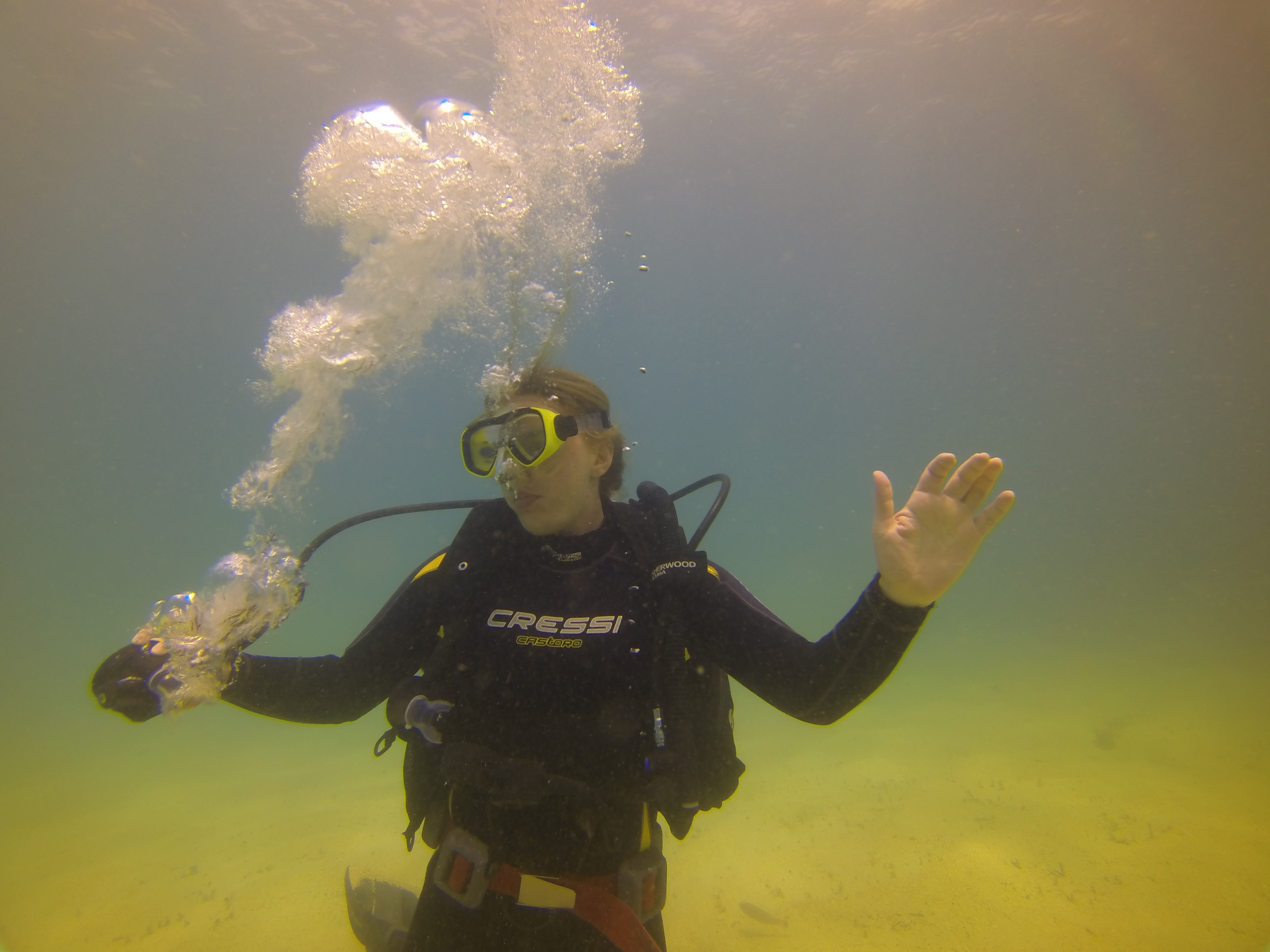
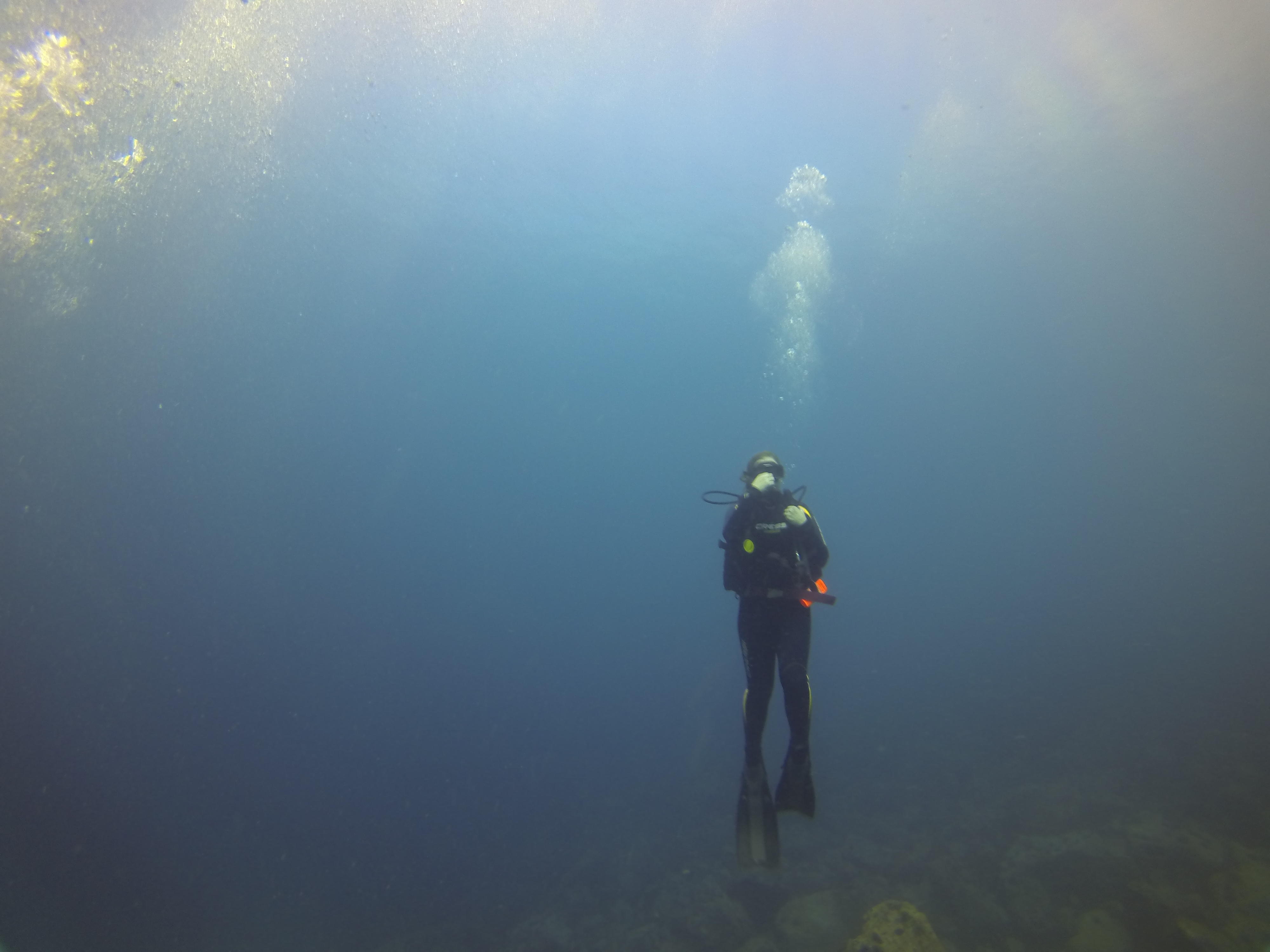
Practicing taking out my regulator under water... looks like I'm dancing though.

It may look like I’m dancing, but I’m actually practicing removing and replacing my regulator (the thing that lets you breathe) underwater.

DCIM104GOPRO

Equalizin’.

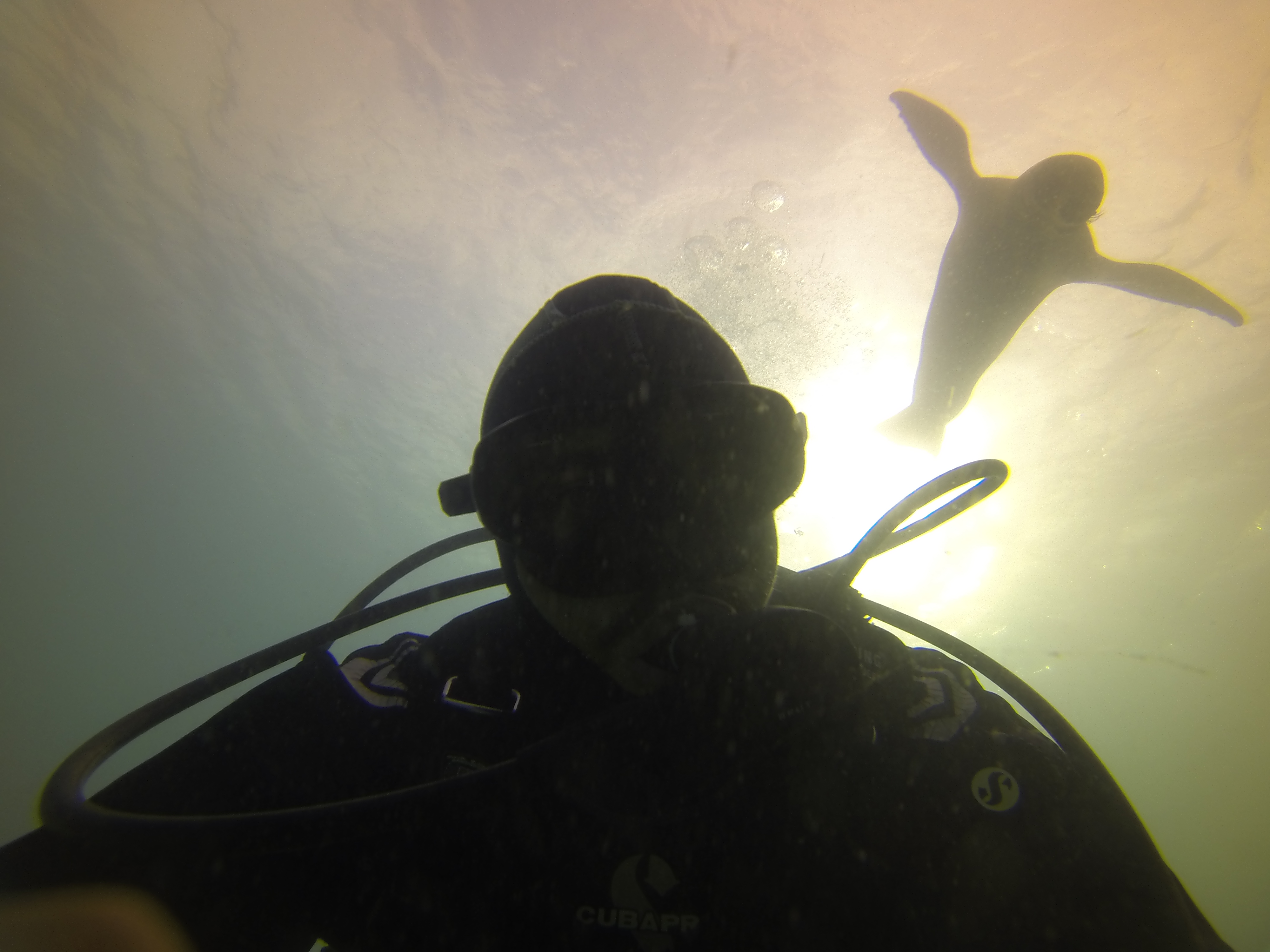
My instructor José (alias Jimbo), who took all the photos on his GoPro

My instructor José (alias Jimbo), who took all the photos on his GoPro, and a curious sea lion

DCIM104GOPRO

DCIM104GOPRO

I was recently reading a book in which the protagonist goes off into the wilderness in order to escape from a life that is falling apart. When she’s almost finished with her journey, she thinks about all the things she had done wrong, but then acknowledges that by getting herself to where she was, she had done right.

That’s how I felt 80 feet below the ocean’s surface.

Somehow, in spite of all the mistakes I’ve made, relationships I’ve let go, jobs I’ve been let go from, opportunities I’ve wasted, I was here, scuba diving in the Galápagos. Thus, in my mind, in that instant, my whole life felt like a success.

If you’ve never gone diving, it’s not really something I can make you understand. It’s alien, like being in another world, as close to outer space as most of us are ever going to get. The only sounds you hear are the shifting of the sand and the ceaseless motion of the tide and the sound of your own breathing. Breathing in itself is no longer something automatic, but something conscious and intentional. Hold your breath and you risk injuring your lungs. Breathe too rapidly and risk running out of air.

I’m very comfortable in the water. Confident of my own abilities, you might say. But the ocean is not just any body of water. The ocean is a bitch. She will chew you up and spit you out (or swallow you down, depending on her mood) faster than you can execute a single breast stroke. You feel that power differently underwater. Swimming on the surface you feel your body pushed back and forth by the current and the tides, you dive under to avoid the big breakers, you kick your legs to ride the smaller swells. But beneath the surface, it is much calmer, the tugging of the tides less insistent. You feel the pressure of her weight in your head, warning you to equalize (by plugging your nose and blowing) your ears, and on your shoulders, pushing you, along with the help of your diving weights, inexorably downwards. And yet once you find neutral buoyancy, neither sinking nor floating, she seems almost tender.

Despite my level of comfort, I did have a moment of anxiety, down there on the bottom. I never told my scuba instructor this, but I had an uncle, whom I never met, who drowned scuba diving in Corona del Mar, California. For this reason I couldn’t tell my mom or grandmother what I was doing until it was done, so they wouldn’t worry. But with my knees buried in the sand, following my air bubbles with my eyes, up up up, I began to think about him, and I started to breathe too fast. I realized what I was doing quickly. You can’t panic underwater. At 80 feet below, you can’t just peace out and shoot for the surface, or you put yourself in danger of decompression sickness, which sounds all kinds of awful. So I closed my eyes and focused on my breath, just like in yoga. In and out, as deeply and as slowly as I could. The moment passed.

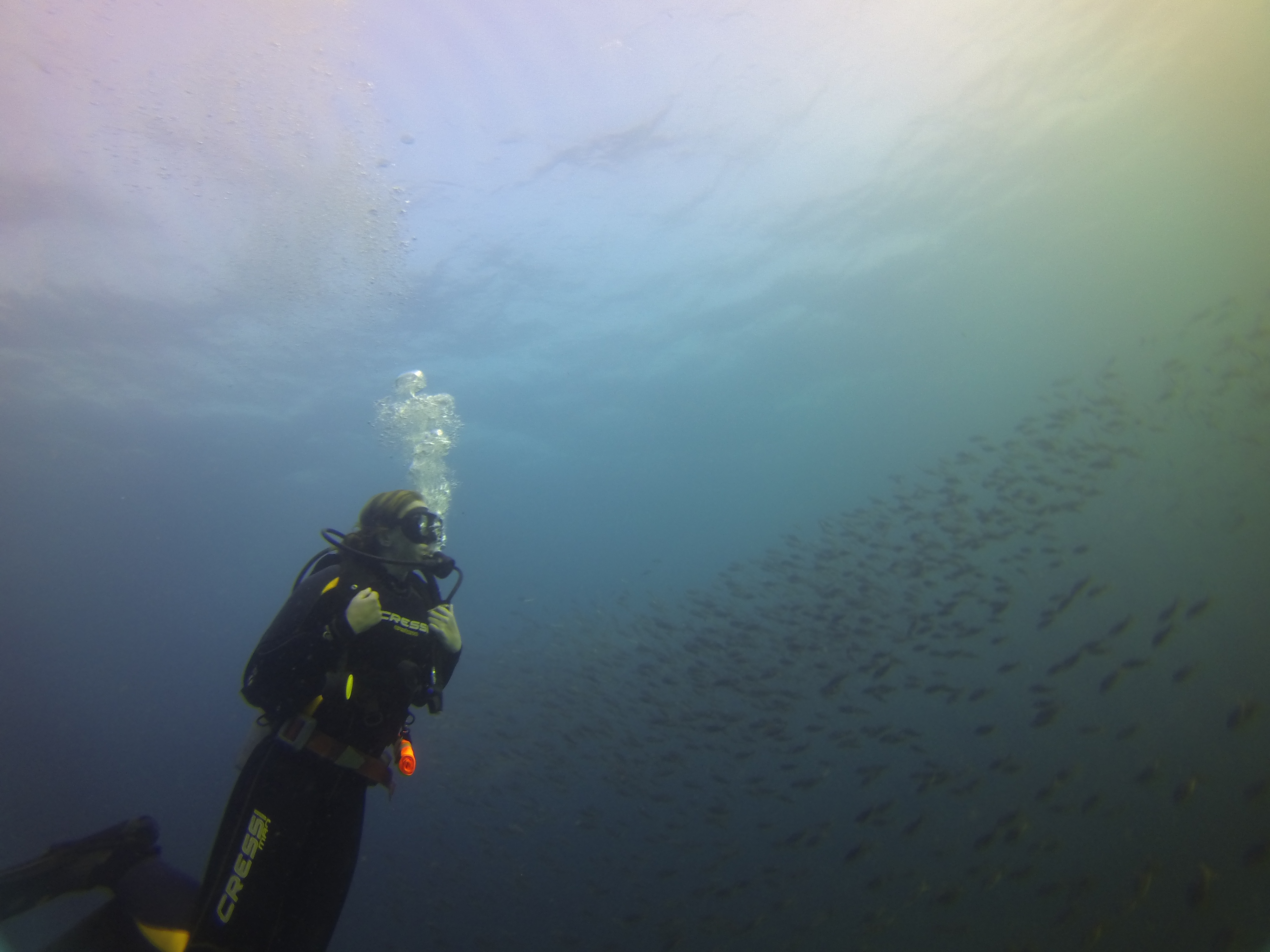
It is fascinating to be privy to a world that most people will never see. I watched schools of hundreds of fish swirl around me like amaranthine bolts of silk. I saw sea cucumbers that looked like they belonged in a Lovecraft story. A small fish endemic to the Galapagos that seems to actually walk the ocean floor on two unwieldy hind legs. I swam through a hundred year old wreck and imagined its more buoyant past compared with its now completely inundated present. When you are underwater, all you have is your breath and your thoughts. Sometimes these take up all your attention and you have to remind yourself to look around.

Also, I am apparently really bad at reading hand signals. My instructor had a whole array of them and I was excruciatingly slow on the uptake.

I remember being under the ocean as if it were a dream. It’s not a linear memory. I didn’t see this and then this and then do that. It’s like flashes of imagined landscapes, except I know they were real.

It’s hard to smile around a respirator, but the soreness in my jaws later told me I never stopped trying.